
Design
Make a silhouette you can recognize
Use ears, tails and quills to create a clear character outline.
· Sonic OC Maker · Revised
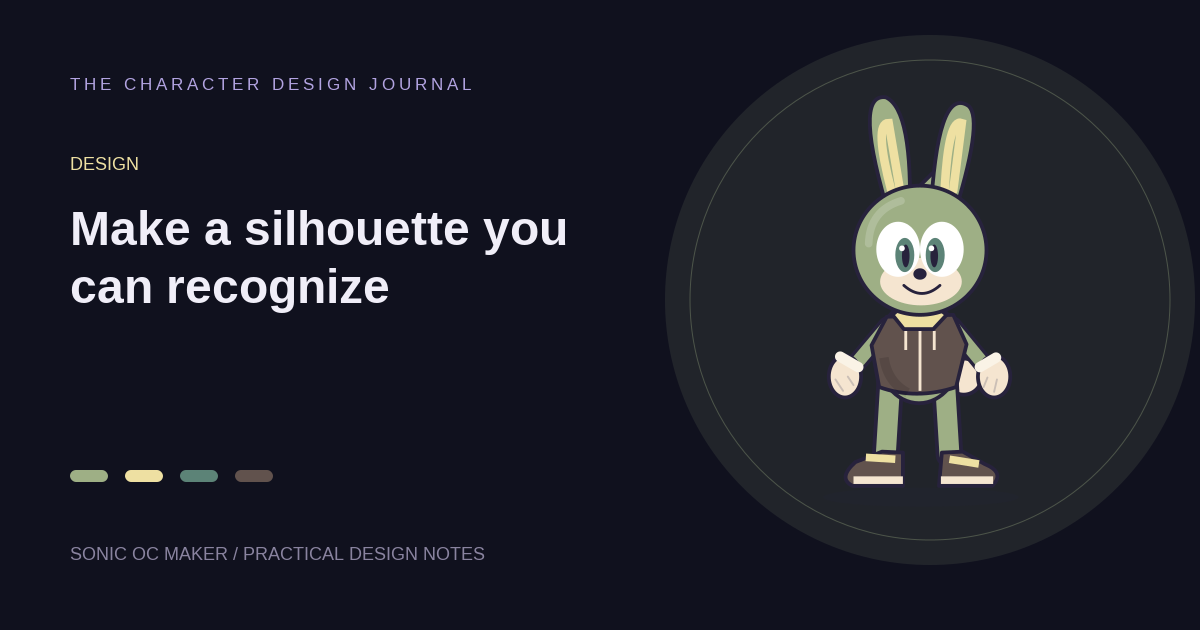
Look at the outside contour first
A silhouette removes the color and interior detail that can distract from the character’s overall shape. In the studio, use silhouette view to inspect the head, ears, limbs, tail and other visible extensions as one outline. The question is whether the important body features remain understandable.
A good silhouette is not necessarily complicated. Several overlapping details can become a single unclear lump when filled in. If the outline loses clarity, first identify which two shapes are merging. Adding another accessory usually does not solve that specific problem.
Test the actual crop
A full-body character and a headshot expose different parts of the silhouette. Rabbit ears may supply the strongest cue in a full view, while a tight crop removes their tips. A tail that distinguishes the body may disappear entirely in a portrait. Plan the image around the information the viewer will receive.
Export a sample and inspect it at the intended size. Do not judge only from a zoomed preview. If you need an action pose that separates overlapping limbs, record that as a drawing request; the editor’s fixed pose does not become a new pose through a written command.
Change one source of complexity
Compare the character with and without its accessory, then restore the version you prefer. Next compare available species while holding the palette still. Each experiment asks a different question. Separating them helps you explain why one version reads more clearly.
The species guide describes how height, width and curved forms differ among the six animal choices. Use those observations to select an outline rather than assigning a predetermined personality to the animal.
Return to color and check what it adds
Silhouette is one test, not the whole design. When you restore color, look for information that the outline cannot provide: expression, color placement and the relationship between face and outfit. A design can have a simple silhouette and still be distinctive through those details.
Save both your selected appearance and a note about the structural feature you want preserved. If an artist changes the pose later, that note explains what should remain recognizable. The reference-sheet guide helps combine the image with instructions that are specific enough to use.