
Concept
Make your OC more than a recolor
Use role, shape and personality to create a distinct identity.
· Sonic OC Maker · Revised
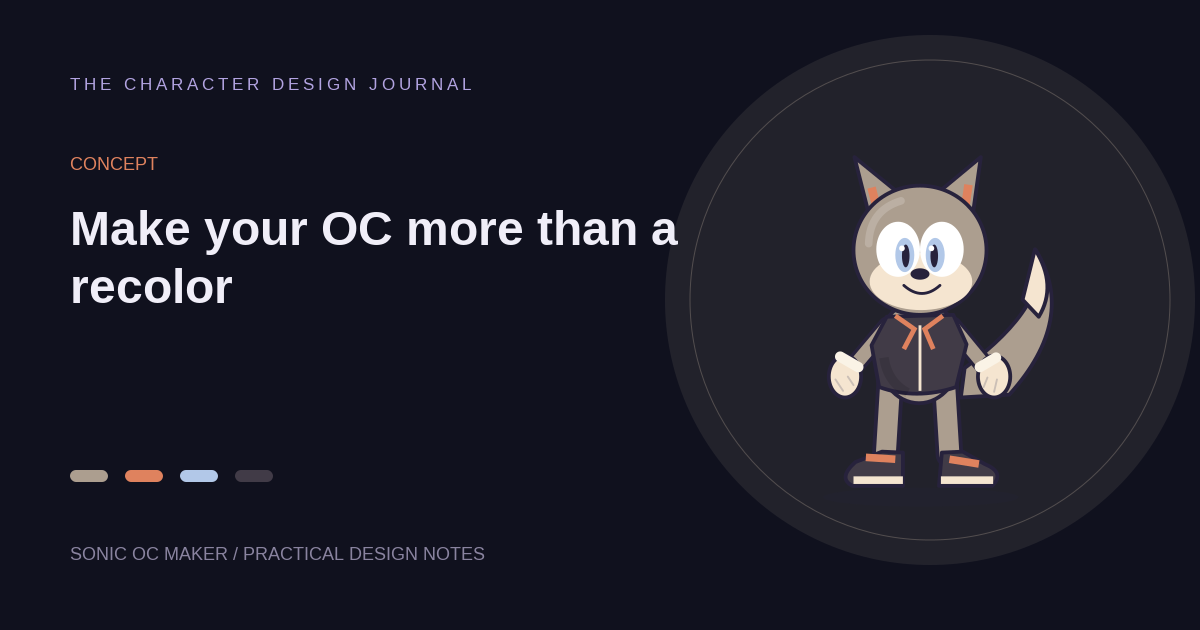
Ask what changes when the character enters a scene
A new palette changes an image. An original identity changes what happens in a story. Begin by giving the character a responsibility, a preference and a decision that another person would handle differently. You can then choose an appearance that supports that identity rather than expecting the color alone to create it.
This does not require an unprecedented species or a complicated power. Familiar roles can produce distinct characters when the relationships and choices are specific. An archivist who restricts access to protect records creates a different problem from one who shares too freely without preserving context.
Separate influence from dependence
Write what you like about the influence: a readable silhouette, energetic movement, a contrast between confidence and vulnerability. Those are useful design questions. Then write what belongs to your own character: a particular goal, a setting and someone affected by the character’s decisions.
If the second list is empty, spend time there before adding accessories. You may discover that you want to change the role, relationship or scale of the story. The character ideas library offers 30 editable premises built around different ordinary responsibilities rather than a single type of hero.
Test the concept without its signature color
Describe the character without naming the palette or comparing them to an existing character. Can another reader still understand what makes the idea interesting? The answer need not be a long biography. “A storyteller asked to correct the account that made them popular” already contains a particular conflict.
Next, look at the design in silhouette view. Choose one or two visual decisions that remain useful even without color. The outline does not have to be unique in every possible context; it needs to communicate the intended character clearly within your own work.
Revise a relationship before revising the costume again
Give a supporting character an understandable objection. That creates a test the OC cannot solve merely by looking impressive. Decide what the OC hears, what they resist and what changes after the conversation. The behavior gives the next visual revision a purpose.
Record the new goal and relationship in the character-sheet tool, then return to the artwork. A different expression or accessory may now make sense because you know the person you are trying to depict. Keep influence acknowledged and avoid presenting a fan concept as official franchise material.